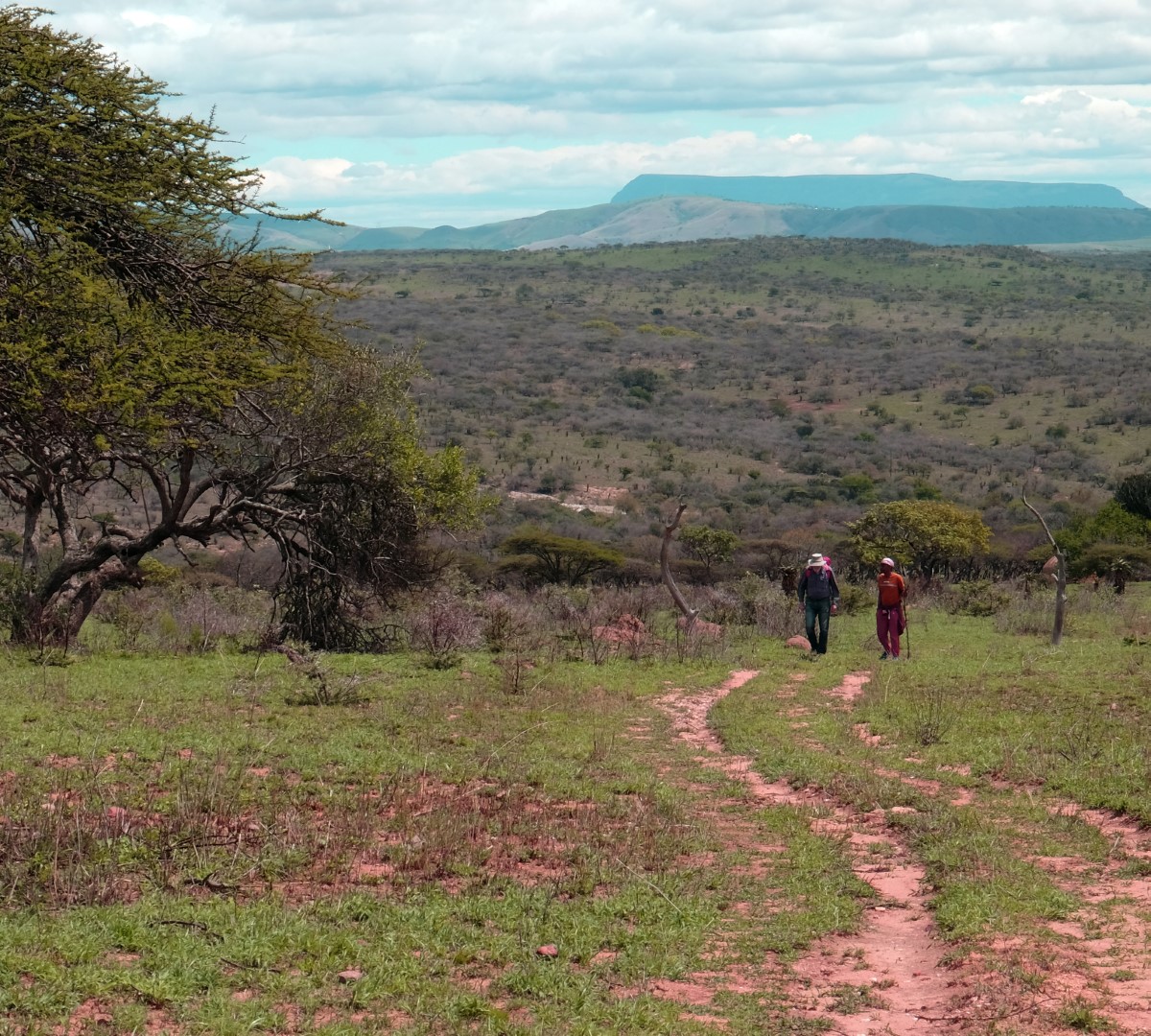
From the entrance a visitor walked upslope through a wide open space containing izibaya (cattle pens). Here people gathered and performed for ceremonial and military events. On either side the izinhlangothi (housing for the amabutho) stretched in two gentle arcs from the top of the settlement towards the entrance gate.
Above and attached to the izinhlangothi lay the isigodlo, the royal enclosure. Dingane lived in the isigodlo together with important female members of his family and the umndlunkulu — a group of girls and young women that Dingane received as tribute from other senior families.
The settlement extended 150 m upslope behind the isigodlo. This was a private area for Dingane and his favourite umndlunkulu girls. The brass smiths also worked here, producing ornaments such as izindondo (beads), izingxotha (gauntlets) and rings for necks, arms and legs.
On 16 December 1838, Voortrekkers led by Andries Pretorius defeated the Zulu forces at iNcome (Blood) River. Dingane retreated northwards after burning uMgungundlovu down. uMgungundlovu existed for just nine years, but the intensity of activity at the capital has left us with abundant archaeological remains.